
When is wasp season in Ireland?
Wasps seem to appear from nowhere in high summer and become unbearable in early autumn, but there is a predictable calendar behind it. Understanding the wasp year tells you when a nest is worth treating, when the stinging peaks, and why the wasps at your picnic in August behave so differently from the ones in September.
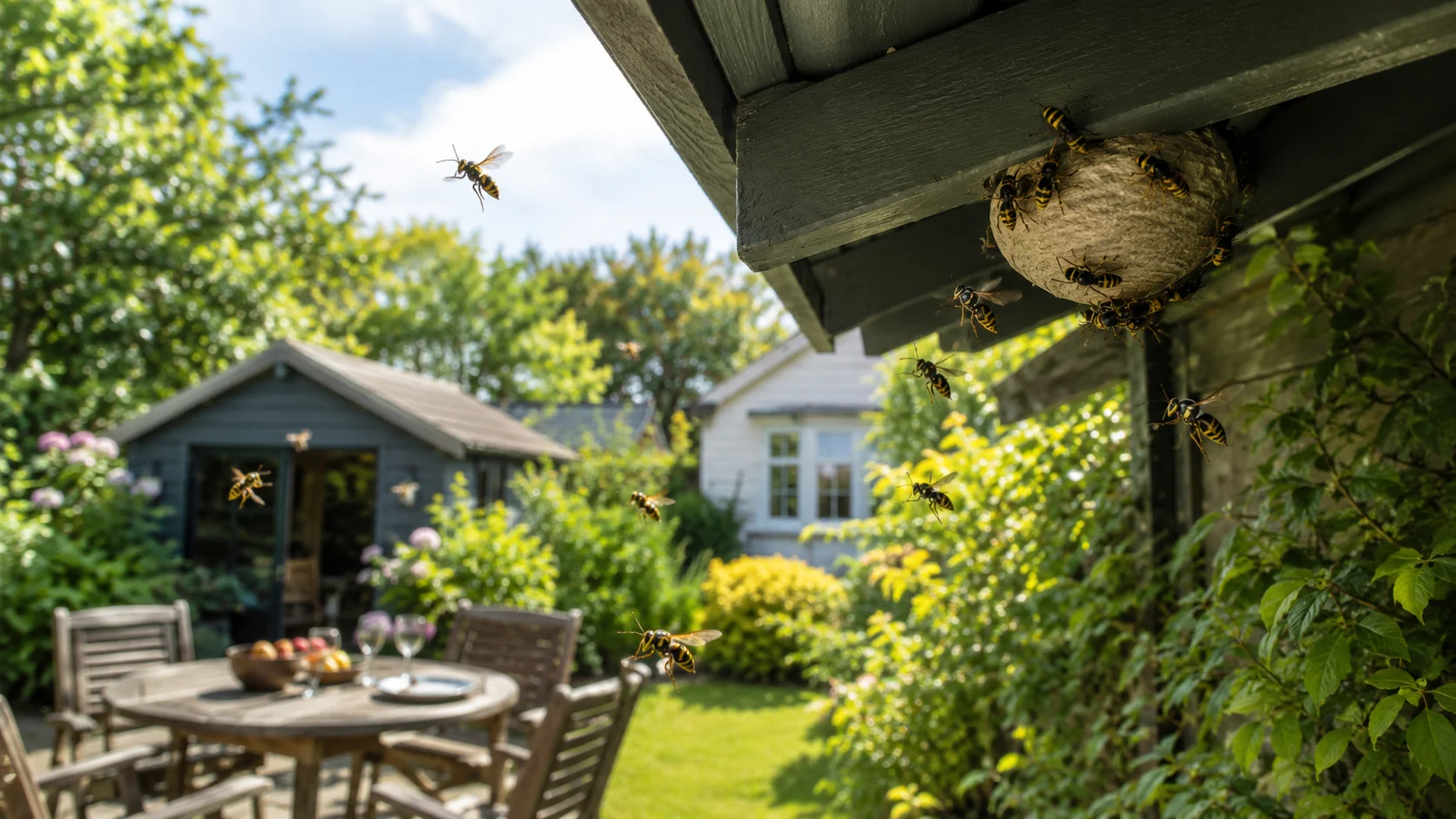
In Ireland, wasp season runs from spring to autumn. In spring, a lone queen starts a small nest. Through early summer, the colony grows quietly, and by July and August it is at its largest, with thousands of workers, which is when nests become obvious, and stings peak. In early autumn the colony stops raising young, and the workers, no longer feeding grubs, turn to sugar and become the bold, aggressive wasps that dive-bomb food and drink. By late autumn the colony dies off, leaving only new queens to overwinter. The nest is best treated as soon as it is active in summer, before numbers and aggression peak.
Spring: the queen starts alone
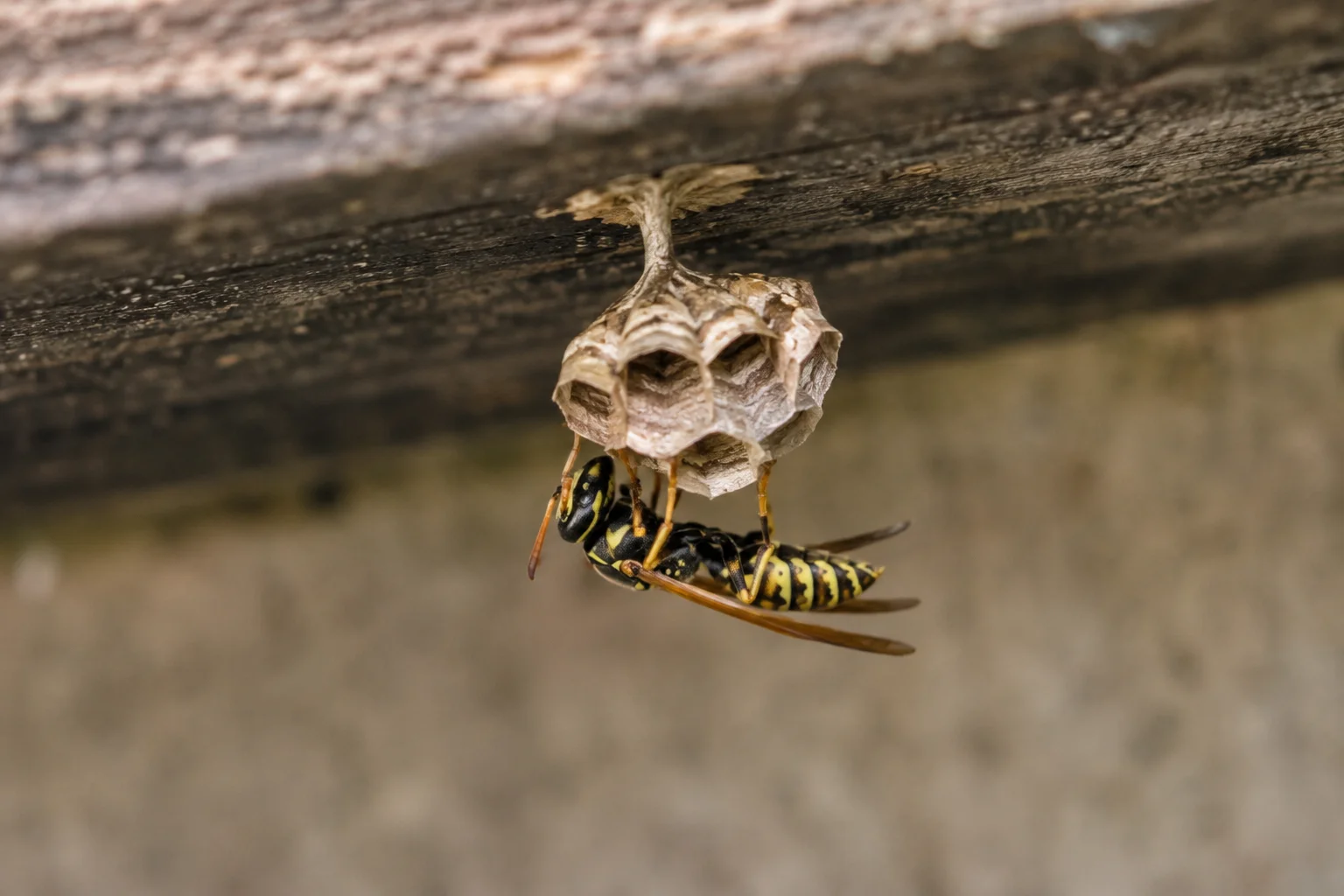
A queen that overwintered emerges in spring and single-handedly builds a small nest, often no bigger than a golf ball, and raises the first workers. At this stage there are very few wasps and little sign of trouble. It is the easiest time to deal with a nest, but also the hardest to spot, because the colony is tiny and quiet.
Summer: the colony grows
Through June, July and August the workers take over and the colony expands rapidly, the nest growing to hold thousands of wasps by late summer. This is when nests become obvious, a steady traffic of wasps at a roofline or in the garden, and when stings peak simply because there are so many wasps out foraging for their grubs. July and August are the high point of the wasp year, and the peak time for nest treatment enquiries.
Autumn: the aggressive end
- The colony stops producing new workers, and the existing ones are no longer busy feeding grubs.
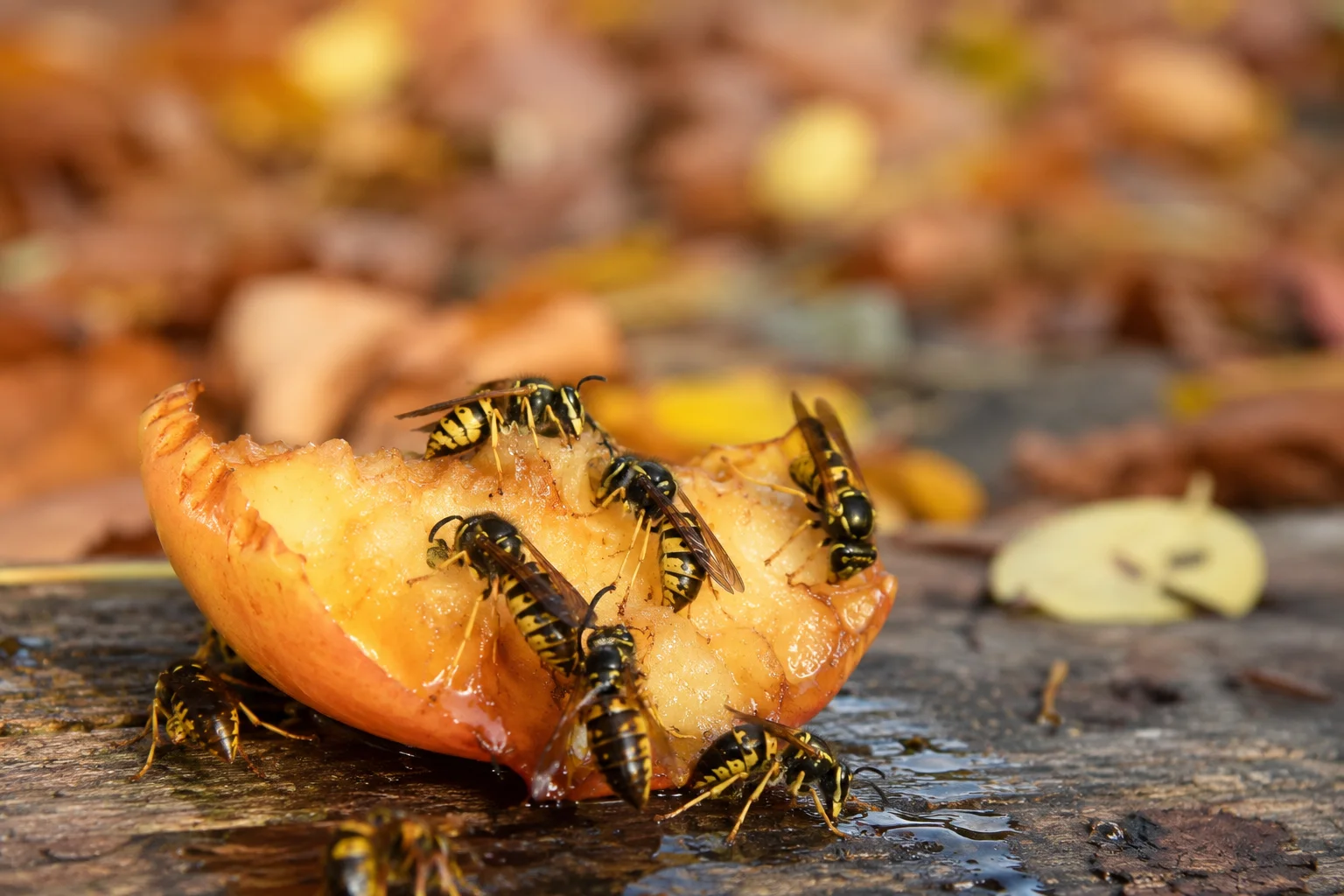
- With no grubs to feed, the workers switch to sugar, fallen fruit, drinks, bins.
- This is when wasps become bold and aggressive around food and drink, and stings feel worst.
- By late autumn the colony dies off; only new queens survive to overwinter and start again.
When to act on a nest
The lesson of the calendar is to act early. A nest treated in early summer is dealt with before it reaches peak numbers and before the aggressive autumn phase, keeping the risk down for the rest of the season. Leaving an active nest until September means living with a large, increasingly bad-tempered colony. If you have an active nest, treating it promptly is easier and safer than waiting. Elis treats wasp nests across Ireland through the season, see wasp nest removal, and stopping wasps coming back next year for prevention.
Frequently asked questions
-
What months are wasps worst in Ireland?
July and August, when the colony is at its largest and most wasps are out foraging, and early autumn, when the workers turn to sugar and become bold and aggressive around food and drink. Numbers are highest in late summer; aggression peaks in autumn. -
Why do wasps get more aggressive in autumn?
Because the colony stops raising young, so the workers are no longer busy feeding grubs and switch to seeking sugar. With their normal job gone, they become bold around fallen fruit, drinks and bins, which is when they feel most aggressive. -
When should I get a wasp nest treated?
As soon as it is active, ideally in early summer before numbers and aggression peak. A nest treated early is dealt with before the worst of the season; leaving it until autumn means a large, bad-tempered colony that is harder to live with.
Get the problem dealt with properly
Elis Pest Control provides commercial and domestic pest control across Dublin and Ireland, with trained technicians who treat the problem at source and stop it coming back.
Book a survey and we will assess the situation and recommend the right treatment.
