
Wasp nests in attics, soffits and wall cavities
Most wasp nests people worry about are not the ones hanging visibly under an eave, they are hidden in the roof space, behind the soffit, or inside a wall cavity, with only a steady stream of wasps at a gap to give them away. These concealed nests are the most common and, because you cannot see or reach them, the ones most in need of professional treatment.
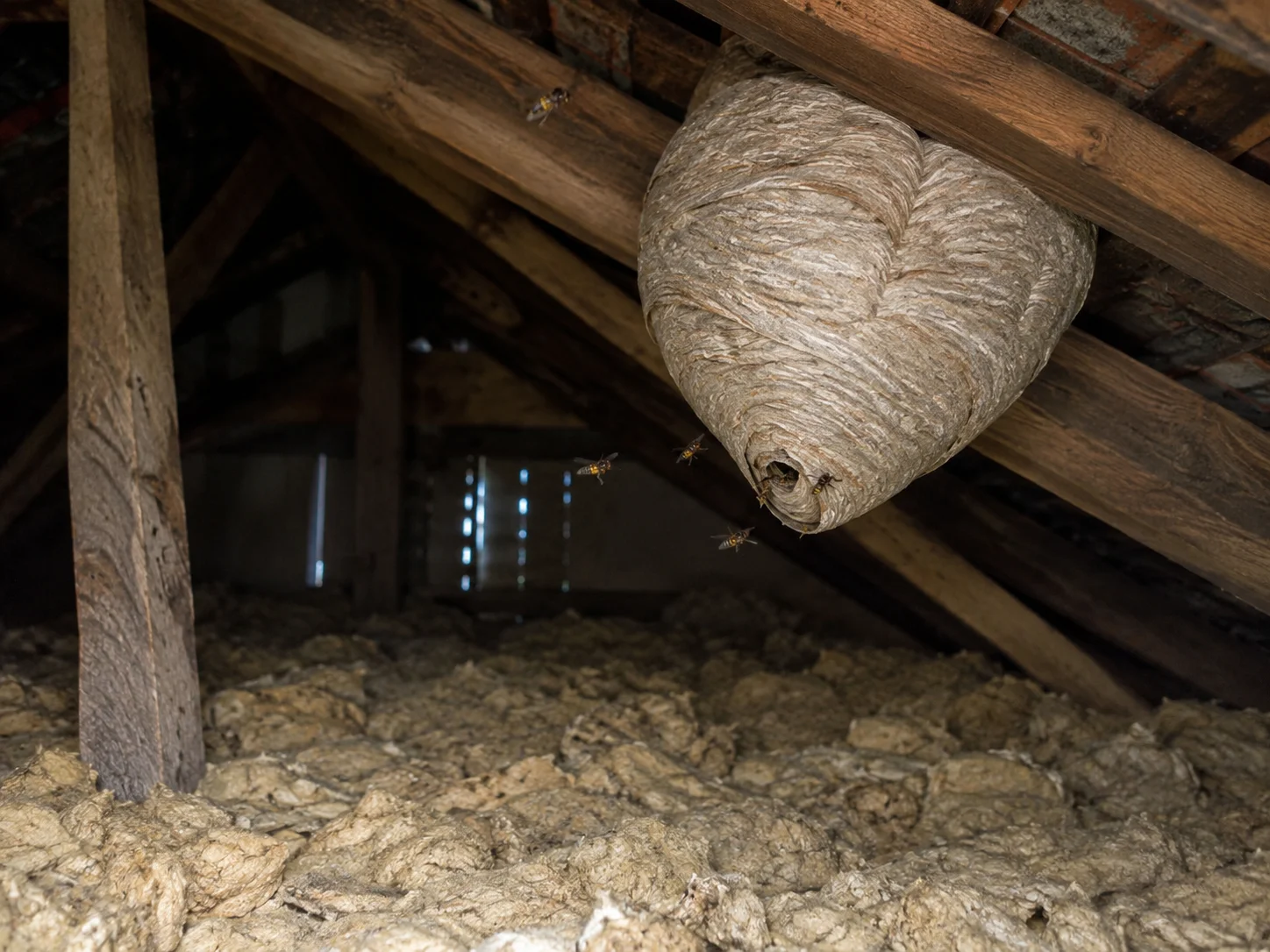
Wasps frequently nest in attics, soffits and wall cavities because these spaces are dry, sheltered and undisturbed, with a small gap to the outside to come and go. The nest itself is usually out of sight, so the sign is a steady stream of wasps entering and leaving one point: a soffit gap, a hole in the render, or under a roof tile. These hidden nests should not be tackled with DIY sprays or by blocking the entrance, because you cannot see the nest, disturbing it provokes mass stinging, and sealing the hole can drive the wasps into the house. Professional treatment applies an insecticide at the entry point so the colony dies off safely.
Why wasps choose these spaces
A wasp queen looks for somewhere dry, sheltered and undisturbed to build, with a small access point to the outside, and attics, soffit boxes and wall cavities are ideal. They are warm, protected from weather, rarely entered, and a tiny gap under a tile, a worn soffit joint or a crack in the render gives the colony its doorway. What starts as a golf-ball-sized nest in spring can grow to hold thousands of wasps by late summer, hidden in the fabric of the building.
The signs of a hidden nest
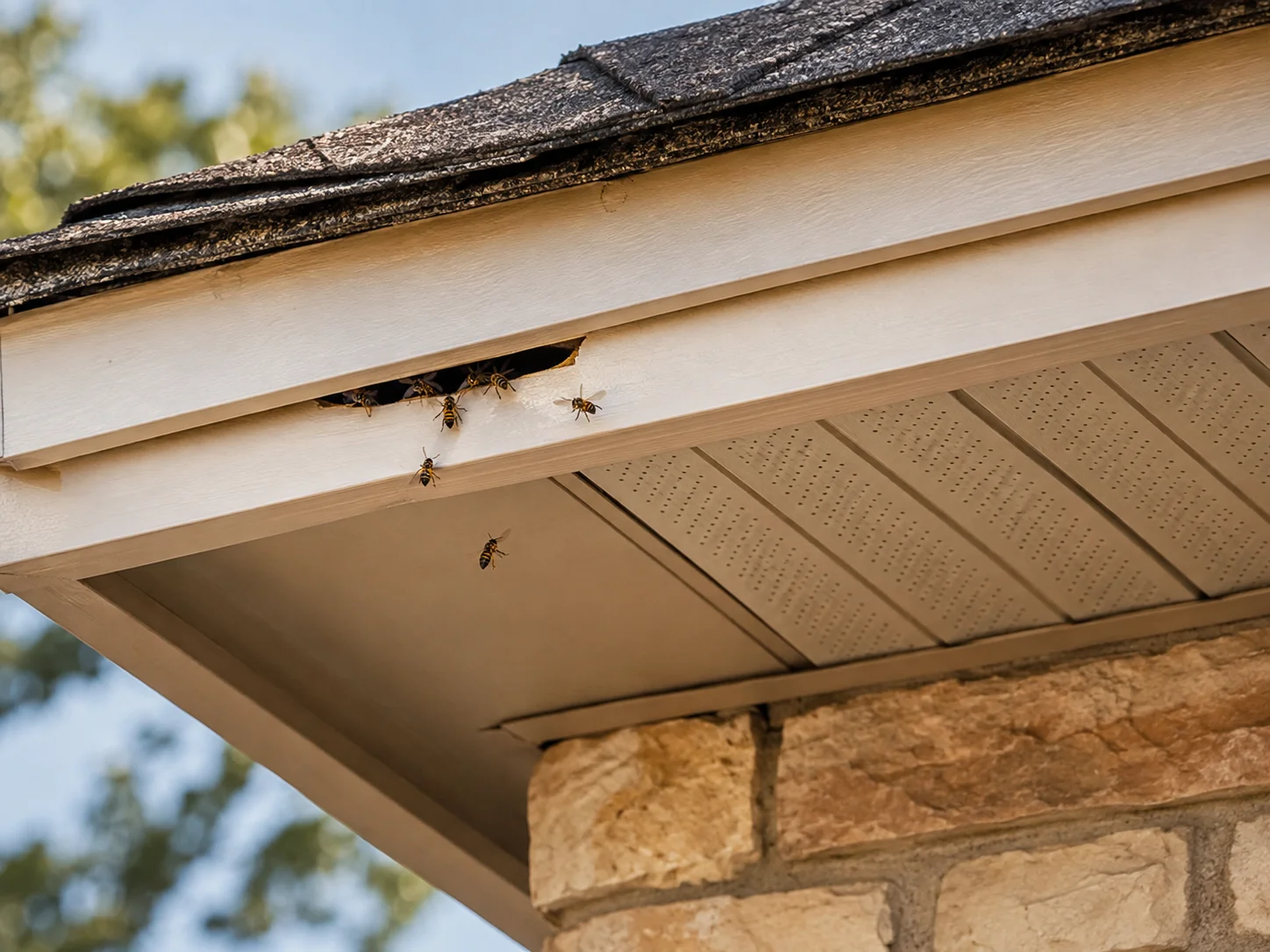
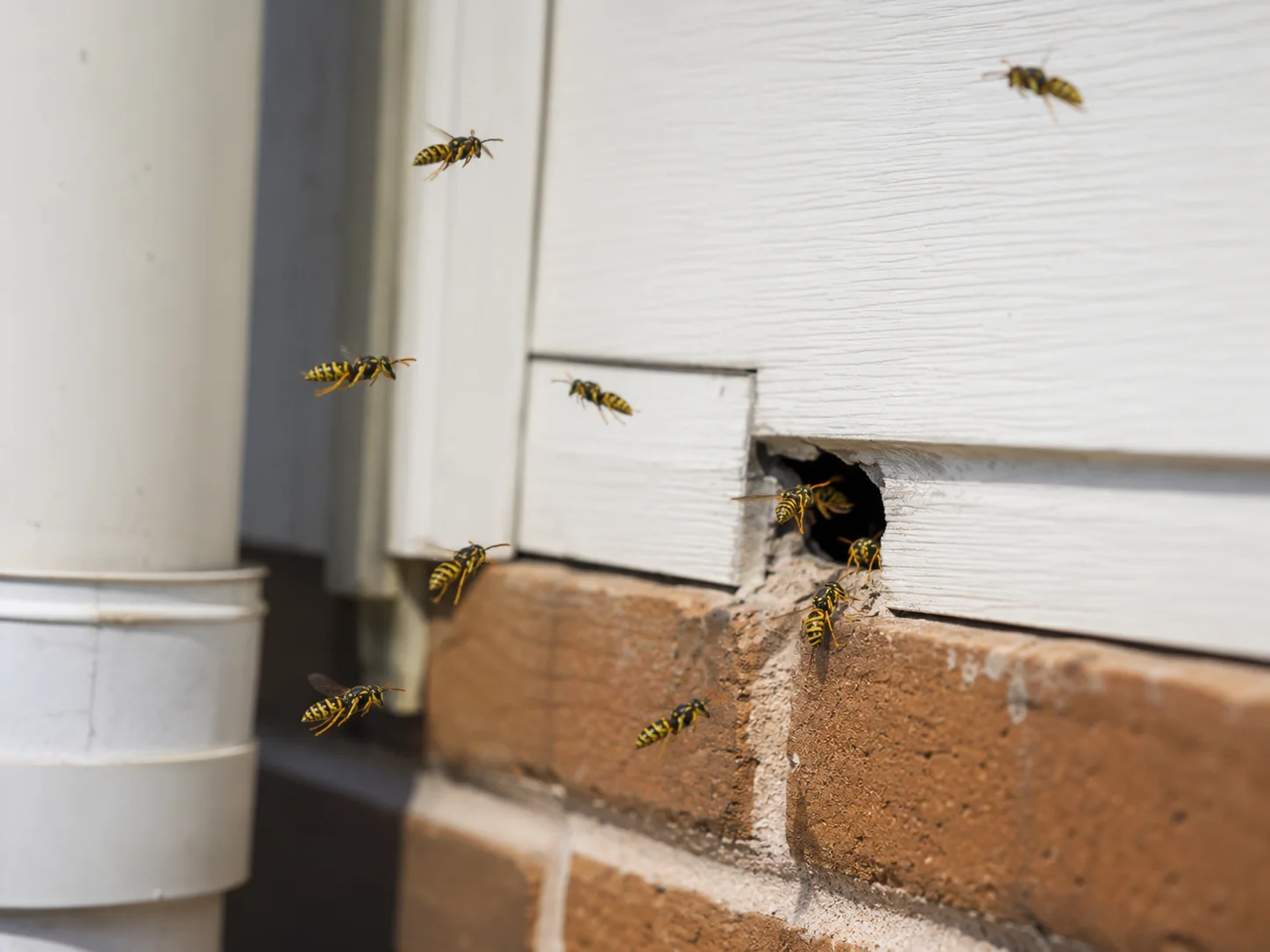
- A steady stream of wasps entering and leaving one point on the outside of the building.
- Wasps concentrated around a soffit, eaves, roofline, air brick or crack in the render.
- A faint rustling or buzzing from a wall or ceiling on a quiet day.
- The odd wasp appearing inside upstairs rooms, especially near the ceiling.
- More wasps around the house than the garden would explain.
Why not to tackle these yourself
Hidden nests are the worst to DIY. You cannot see the nest to treat it, so a shop spray at the entrance rarely reaches the colony. Disturbing a nest in a confined space triggers defensive mass stinging with nowhere for the wasps to disperse. And the common instinct, blocking the entry hole, is the worst move: trapped wasps chew through into the building instead, bringing the nest indoors. Nests at height, in roofs and cavities, also mean working on ladders around agitated wasps.
How professional treatment works
A technician identifies the true entry point, applies an approved insecticidal treatment there, and lets the wasps carry it into the concealed nest as they move in and out. The colony dies off, usually within a day or two, without the nest ever being opened up. The entrance is left open until activity stops, so no wasps are driven inside. Elis treats hidden wasp nests in attics, soffits and cavities across Ireland. See our wasp nest removal service, and if you are not sure it is wasps, wasp, hornet or bee.
Frequently asked questions
-
How do I know if there's a wasp nest in my wall or attic?
The clearest sign is a steady stream of wasps entering and leaving one point: a soffit gap, roofline, air brick or crack in the render, even though you cannot see the nest. You may also hear faint buzzing from a wall or ceiling, or find the odd wasp in upstairs rooms. -
Should I block the hole where wasps are getting in?
No. Sealing the entrance traps the colony, and the wasps chew through into the building instead, bringing the nest indoors. The entry point should be left open and the nest treated professionally, so the wasps carry the treatment in and die off before the hole is closed. -
Can you treat a wasp nest you can't see?
Yes. A technician treats the entry point with an insecticide, and the wasps carry it into the concealed nest as they come and go, so the colony dies off without the nest being opened. This is the standard, safe way to deal with nests in attics, soffits and cavities.
Get the problem dealt with properly
Elis Pest Control provides commercial and domestic pest control across Dublin and Ireland, with trained technicians who treat the problem at source and stop it coming back.
Book a survey and we will assess the situation and recommend the right treatment.
